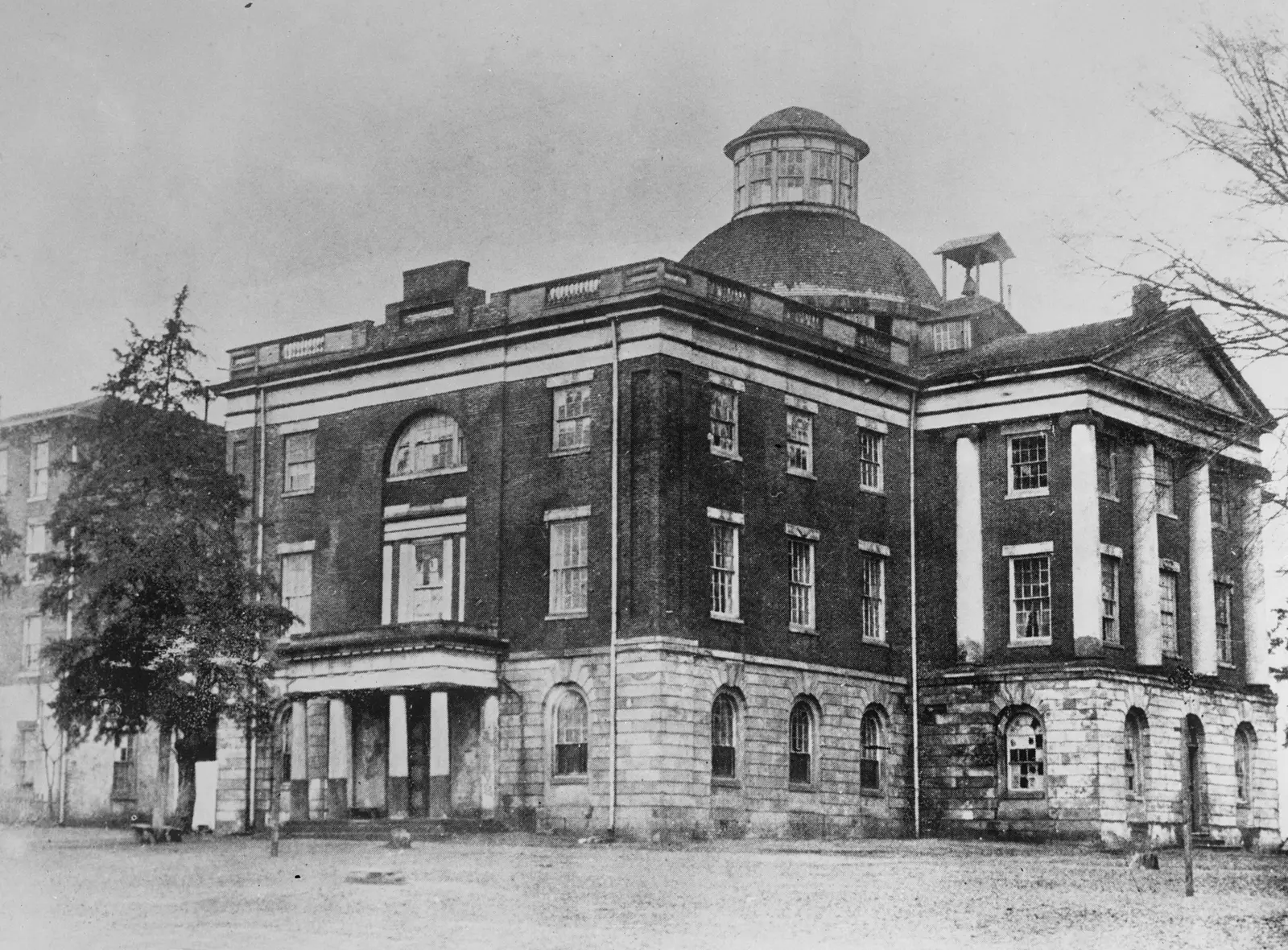
Tuscaloosa was incorporated Dec. 13, 1819, and was Alabama's capital from 1826 to 1846. Its 36 National Register listings, museums and historic homes.
Last checked Oct. 17, 2026. History on this page comes from the Encyclopedia of Alabama; listings come from the National Park Service’s National Register data (file dated May 22, 2026); sites and hours come from Historic Tuscaloosa and the institutions named.
Tuscaloosa was incorporated and made the county seat on Dec. 13, 1819, a day before Alabama became a state. It is named for Tuskaloosa, leader of the Mississippian town of Mabila, who was executed by Hernando de Soto’s men in 1540. From 1826 to 1846 it was Alabama’s capital, and the University of Alabama has been here since 1831.
Who to call
- Historic Tuscaloosa (Battle-Friedman House, Jemison-Van de Graaff Mansion, Old Tavern tours): 205-758-2238
- Murphy African-American Museum: 205-758-2861
- Alabama Museum of Natural History: 205-348-7550
- City Historic Preservation Commission: Planning Division, 205-248-5100
A short history
- 1816: Thomas York, the first white settler, arrives with his family. Native American peoples had lived on the site at various times since at least the 16th century.
- Dec. 13, 1819: Tuscaloosa is incorporated and made county seat. The seat moves briefly to nearby New Town in 1822; New Town is absorbed into Tuscaloosa by 1826.
- 1826 to 1846: Tuscaloosa is the state capital, until a population shift east sends the legislature to Montgomery.
- 1831: the University of Alabama, chartered in 1820, takes its first students.
- Early 1840s: a severe tornado destroys many of the original buildings.
- 1859: the Alabama Insane Hospital opens; it is renamed Bryce Hospital in 1900.
- Civil War: Union troops under Gen. John T. Croxton, detached from Gen. James H. Wilson’s raid, burn most of the university’s public buildings, including its library.
- 1890s: Army Corps of Engineers locks and dams on the Black Warrior River open a route to the port of Mobile.
- 1964: the Tuscaloosa civil rights campaign, begun March 8, culminates on June 9, “Bloody Tuesday,” when police and a white crowd attack marchers leaving First African Baptist Church.
- 1993: Mercedes-Benz chooses Tuscaloosa to launch Alabama into the automotive industry.
- April 27, 2011: a tornado outbreak kills 39 people in Tuscaloosa and surrounding communities.
The nicknames “Oak City” and “Druid City” date from the early years, when huge water oaks lined downtown streets.
Museums and historic sites you can visit
| Site | Address | Phone |
|---|---|---|
| Battle-Friedman House and Gardens | 1010 Greensboro Ave. | 205-758-2238 |
| Jemison-Van de Graaff Mansion | 1305 Greensboro Ave. | 205-758-2906 |
| The Old Tavern | 500 Nicks Kids Ave. | 205-752-1998 |
| Murphy African-American Museum (Murphy-Collins House) | 2601 Paul W. Bryant Drive | 205-758-2861 |
| Gorgas House Museum, University of Alabama | 810 Capstone Drive | 205-348-5906 |
| Alabama Museum of Natural History | 427 Sixth Ave., University of Alabama | 205-348-7550 |
| Bryce Mental Health Museum | 200 Bryce Lawn Drive | 205-348-1101 |
| Capitol Park, ruins of the state capitol | 2800 Sixth St. | 205-562-3210 |
Historic Tuscaloosa’s guided tours of the Battle-Friedman House, the Jemison-Van de Graaff Mansion and the Old Tavern are generally offered Tuesday through Friday; times vary by property and season, so check its calendar or call before you go. Addresses and phones are from Historic Tuscaloosa, Visit Tuscaloosa and the Tuscaloosa County Park and Recreation Authority.
The Tuscaloosa Civil Rights Trail, a self-guided walking tour developed by the Tuscaloosa Civil Rights History and Reconciliation Foundation, marks sites from the 1964 campaign.
National Register of Historic Places
From the National Park Service’s list, in order of listing:
| Listed | Property | Location |
|---|---|---|
| 1971 | Collier-Overby House | Ninth Street and 21st Avenue |
| 1971 | Gorgas-Manly Historic District | University of Alabama campus |
| 1972 | Battle-Friedman House | 1010 Greensboro Ave. |
| 1972 | President’s Mansion | University of Alabama campus |
| 1972 | Old Observatory | University of Alabama campus |
| 1972 | Jemison-Van de Graaff House | 1305 Greensboro Ave. |
| 1973 | Guild-Verner House | 1904 University Ave. |
| 1975 | Druid City Historic District | Queen City Avenue to 21st Avenue |
| 1975 | Searcy House | 2606 Eighth St. |
| 1977 | Alabama Insane Hospital (Bryce) | University Boulevard |
| 1979 | Old Tuscaloosa County Jail | 2803 Sixth St. |
| 1980 | Wheeler House | 2703 Seventh St. |
| 1984 | Bama Theatre-City Hall Building | 600 Greensboro Ave. |
| 1984 | Searcy House | 815 Greensboro Ave. |
| 1985 | Carson Place | 610 36th Ave. |
| 1985 | City National Bank | 2301 University Blvd. |
| 1985 | Foster Home/Sylvan Plantation | Off U.S. 11 |
| 1985 | Caplewood Drive Historic District | Caplewood Drive and University Boulevard |
| 1985 | Audubon Place Historic District | University Boulevard and Audubon Place |
| 1986 | Downtown Tuscaloosa Historic District (enlarged 1989 and 1997) | Fourth Street to Seventh Street, Greensboro Avenue to 22nd Avenue |
| 1986 | Pinehurst Historic District | Pinehurst Drive and 17th Avenue |
| 1987 | Fitch House | 3404 Sixth St. |
| 1988 | First African Baptist Church | 2621 Ninth St. |
| 1990 | Robert Jemison Servants’ House | 2303 13th St. |
| 1992 | Queen City Pool and Pool House | Queen City Avenue and Riverside Drive |
| 1993 | Murphy-Collins House | 2601 Paul W. Bryant Drive |
| 2000 | Margaret Quayle Lustron House | 27 Parkview Drive |
| 2001 | Druid City Historic District, boundary increase | College Park and Queen City Avenue |
| 2005 | Foster Auditorium, University of Alabama | Sixth Avenue |
| 2012 | Tuscaloosa Veterans Administration Hospital Historic District | 3701 Loop Road East |
| 2015 | Jemison School-Drish House | 2300 17th St. |
| 2018 | Kennedy-Foster House | 1842 25th Ave. |
| 2020 | The Alabama Book Store | 1015 University Blvd. |
| 2021 | Stillman College | 3601 Stillman Blvd. |
Many are private homes; view them from the street. Changes to buildings in the city’s local historic districts need a Certificate of Appropriateness; see building permits and zoning.
More guides: Tuscaloosa population and growth, things to do in Tuscaloosa this month and parks and trails.
Frequently asked questions
When was Tuscaloosa founded?
Tuscaloosa was incorporated and made the county seat on Dec. 13, 1819, a day before Alabama was admitted to the Union, according to the Encyclopedia of Alabama. The first white settler, Thomas York, arrived with his family in 1816.
Was Tuscaloosa ever the capital of Alabama?
Yes. Tuscaloosa was the state capital from 1826, when the legislature moved the seat of government from Cahaba, until 1846, when it moved to Montgomery. The capitol’s ruins stand in Capitol Park at 2800 Sixth St.
Why is Tuscaloosa called the Druid City?
In its early years Tuscaloosa was known as the Oak City and the Druid City, after the ancient Celtic people who revered oaks, because huge water oaks lined its downtown streets, the Encyclopedia of Alabama says.
How many National Register of Historic Places listings are in Tuscaloosa?
The National Park Service’s May 2026 list shows 35 listings with a Tuscaloosa address, plus the Old Observatory on the University of Alabama campus, filed under University.
Who is Tuscaloosa named after?
Tuskaloosa, leader of the Mississippian town of Mabila, who was executed by Spanish explorer Hernando de Soto’s men in 1540.
Have your say